During periods of extreme market volatility, and decline in particular, the sage advice to investors is to “hold on.” That’s true because within a year or two, markets will recover and continue their upward path. Getting out of your investment (i.e., selling) will have the effect of locking in the loss. But what if you can’t hold on? If your portfolio is your registered pension income, or will soon become one, then periodic withdrawals are going to happen regardless of market behaviour. And avoiding the markets altogether will lead to a shorter lifespan for your pension income.
The answer is a portfolio that can do two things at once: let you hold on to your investments during market declines but still provide income without selling any of those investments while they are down in value. It just takes a bit of planning ahead.
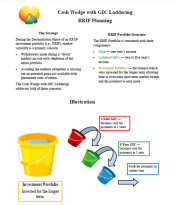 The principle behind an income portfolio that can withstand market volatility is known as the “Cash Wedge”, which includes a measure of guaranteed investment certificates (GICs) with laddered maturity dates. Click thumbnail at right to open a pdf in new window.
The current market environment can be worrisome. If you are a young investor with a lengthy time horizon (several years before any withdrawals), then the best thing is to not fret over the markets and ride out the volatility.
If your time horizon is much shorter (withdrawals within 3 to 5 years), then let this current market uncertainty be a signal that your portfolio may require some design changes.
 Hazel Fluke, Financially Speaking