Hiding Inflation

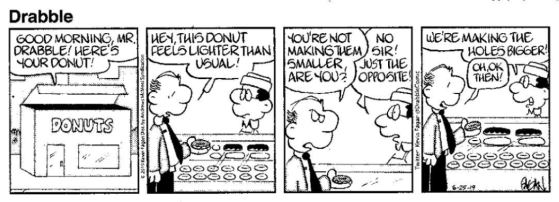
Drabble comic -donut

Inflation is the widespread increase in prices in an economy caused when a country’s money supply is increased faster than its aggregate production.  It means that *everything* costs more today than it did yesterday.

Consumers do not react well to rising prices and companies know this.  Rather than risk consumer wrath – and the loss of their patronage – companies find a way to hide the price increase.  Here’s an example:
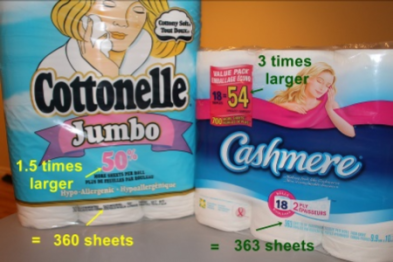
TP -inflation-webSome years ago, Cottonelle toilet tissue re-branded their product as Cashmere.  But in doing so, the product and the packaging underwent an evolution of changes where the product shrank in size while the price remained about the same.

The old packaging of Cottonelle boasts jumbo-sized rolls that are 1.5 times larger than regular, with 360 sheets per roll.  Today, a package of Cashmere declares its rolls are 3 times larger than regular, with… wait for it… 363 sheets per roll.
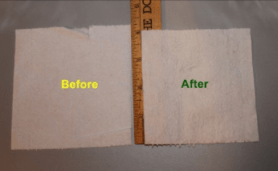
TP -squares-webAnd that’s not all.  Even the size of an individual square has been reduced.

Cashmere is not alone using this strategy of hiding inflation.  I have noticed many products being packaged in smaller and smaller sizes or quantities.  Some examples that come to mind are cheese, cookies, and bacon.  Do you have more examples?

A Savings Habit – Plan your meals

adult blond board brunette
Photo by Pixabay on Pexels.com

In almost every case, a meal prepared at home cost less than the same meal in a restaurant, take-out, or delivery.  So, if you’re looking for a way to reduce your monthly food bill, choose homemade meals over eating out.

That’s easier said than done.  You come home from work and you’re tired and hungry.  Is this a moment when you’re going to start chopping carrots, peeling potatoes, and seasoning your meat?  And that’s assuming you even have all those ingredients in your refrigerator.  It’s hard to start a habit of home cooked meals, when the conditions aren’t in line with the goals.

To get the savings habit of homemade meals going, plan your meals ahead of time, perhaps on a weekly basis.  Choose a time – probably on the weekend – where you figure out what you will have for dinner on each of the days ahead.  Then, set yourself up for success by making sure you have what you need readily available.  That may call for grocery shopping and maybe some weekend “bulk” cooking, like preparing a lasagna or roasting a chicken.

Failing to plan is planning to fail.”  (Alan Lakein, author on personal time management, including, “How to Get Control of Your Time and Your Life”)

A Savings Habit post.

piggy-bank

Transitioning from Employment to Retirement

black calculator near ballpoint pen on white printed paper

Photo by Pixabay on Pexels.com

Employment provides a flow of paycheques.  Cash flow management may be minimal while you’re employed because when you spend one paycheque, you know that another one is on the way.  Not only that, the right amount of income tax is often already withheld from your pay, so that come Tax Day, there is no more income tax owing.

Retirement requires a lot more cash flow management.  For example, it is most likely that income tax withheld from a pension cheque (if any) will fall short of the total income tax owing come Tax Day.  That calls for planning.

Needing to find extra cash on Tax Day is minor compared to the devastation that can happen if your retirement pension comes solely from savings (like an RRSP, or a company lump-sum retirement amount) and there’s been no planning.  I know of a couple who received a large payout when the husband retired.  They were not used to any kind of money management and saw the payout as a windfall for big-ticket spending.  They spent it all within a few short years.  The wife, who eventually became widowed, lived a long time, with government pension as her only income.

If you are not used to hands-on cash flow management (tracking money in and money out), don’t wait until retirement and risk the hard lessons.  Get to know your personal cash flow while you’re still employed and determine what the difference will be when those employment paycheques stop, and the pension pay begins.

Prager U: How to Raise Kids who are Smart about Money

In this Prager U video, narrator and personal finance expert, Rachel Cruze offers three principles for raising kids to be smart about money.  Very sound advice overall, although I would not dismiss the use of allowance as a money management teaching tool, as she does.  Cruze is correct that when children earn their own money, they will experience “accomplishment” with their purchases, rather than “entitlement” as when money is given to them to spend.  She views allowance as a form of giving money for “breathing” (i.e., for nothing).

When parents actively teach their children money management with the use of allowance, then it’s not for nothing.  Cruze suggests that children should “work” for their “pay” by doing age-appropriate chores around the house.

Allowance or payment for chores?  Which is the better money management teaching tool?  Parents will know the answer, because they know their children.

Charging Room & Board

Parents who charge their grown-up children room and board are passing on a valuable life lesson as well as an important life skill.

The lesson is that things we want or need come at a price.  It is unrealistic to believe that we can find a place to live for free–especially a place where meals are provided.  Where better to learn this than in the nurturing safety of one’s family home.

And charging room and board teaches our adult children the mechanics of periodic savings.  It is not difficult to transfer the habit of putting aside a portion of income to the process of a monthly savings plan.  Some parents keep a separate account of the room and board receipts, with the intention of gifting back the accumulation on some special occasion such as wedding or first home purchase.  I like this gesture because it demonstrates quite concretely the benefits of savings, albeit forced savings.

Whether parents charge room and board to help meet household expenses, or to gift back at some future date, the benefits remain the same.  Their children learn about life and develop the skill of the savings process.