
Income Portfolios and Market Volatility

graph illustration
Photo by Burak K on Pexels.com

During periods of extreme market volatility, and decline in particular, the sage advice to investors is to “hold on.”  That’s true because within a year or two, markets will recover and continue their upward path.  Getting out of your investment (i.e., selling) will have the effect of locking in the loss.  But what if you can’t hold on?  If your portfolio is your registered pension income, or will soon become one, then periodic withdrawals are going to happen regardless of market behaviour.  And avoiding the markets altogether will lead to a shorter lifespan for your pension income.

The answer is a portfolio that can do two things at once:  let you hold on to your investments during market declines but still provide income without selling any of those investments while they are down in value.  It just takes a bit of planning ahead.
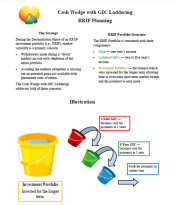
Cash WedgeThe principle behind an income portfolio that can withstand market volatility is known as the “Cash Wedge”, which includes a measure of guaranteed investment certificates (GICs) with laddered maturity dates.  Click thumbnail at right to open a pdf in new window.

The current market environment can be worrisome.  If you are a young investor with a lengthy time horizon (several years before any withdrawals), then the best thing is to not fret over the markets and ride out the volatility.

If your time horizon is much shorter (withdrawals within 3 to 5 years), then let this current market uncertainty be a signal that your portfolio may require some design changes.

The Asset Class Matrix

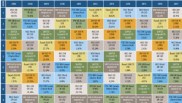
After each calendar year, we can look back and observe which investment asset class performed the best.  Was it International Equities?  Was it High Yield bonds?  Or was it US Small Caps?  Good to know, but there is a danger of concluding that the year’s winner is the best place to invest your savings.

Take a look at this matrix of annual rankings of key asset classes over the last decade (click the chart to open a pdf in a new page):

Matrix-invest_class

You will see that the asset class rankings shift all over the place from year to year.  In some cases, the worst performer one year becomes the best performer in the very next year.  No one can predict with consistent accuracy, the future rankings of these asset classes.

So, while the returns of these individual asset classes swing widely, a portfolio built with a balance of all these asset classes will smooth out the variation.  And no need to predict the winner if you have all the bases covered.

Can Investments be Overdiversified?

basket colourful decoration easter
Photo by Pixabay on Pexels.com

A well-known investment adage is, “don’t put all your eggs in one basket.”  The literal translation is, if the one and only basket falls, then all your eggs will be broken.  But if you kept your eggs in several baskets, then the fall of one basket will not destroy your entire stock of eggs.

Applied to financial investing, the rule is, don’t put your entire savings into one company’s stock.  If that one company fails, then all of your savings will be gone.  The solution is to diversify – spread your investment dollars over several unrelated businesses and industries.

Unfortunately, many Canadians apply the “one basket” rule to financial institutions.  That is, they “diversify” by spreading their investment savings over two or three different financial institutions.  Not only is this NOT an application of the rule, but by doing so, the savings might actually end up in the same basket!

Each financial institution may not be aware of what the other financial institutions are recommending for the client’s portfolio.  As a result, the client may end up with the same stocks in all of their investment accounts.

Sometimes, overdiversification can lead to no diversification.

Yikes! The Stock Markets are Falling!

Or, Yay! Stocks are on sale!

Watching stock markets decline is uncomfortable.  Real losses to our savings can occur when we give in to fear and withdraw our investments (sell).  We have all heard of “Buy low, sell high” but putting that advice into practice is another matter altogether.

On the other hand, professional investors, as in fund managers, can and do apply that investment advice.  These pros are delighted to see stock prices fall and eagerly go on a buying spree.  They keep a cash reserve in their funds for this purpose.

Think of a market decline the way professional investors do.  Your mutual or segregated fund has a professional investor who is buying up quality stocks at bargain prices.  So, when the markets recover (they always have, they always will), your own portfolio will have benefited.